Amalfi Coast in Shoulder Season
In shoulder season, terrace tables open, trails are breezy, and rates soften—here’s how to time ferries.
Blog Details
Spices, textiles, and the rhythm of ancient commerce.
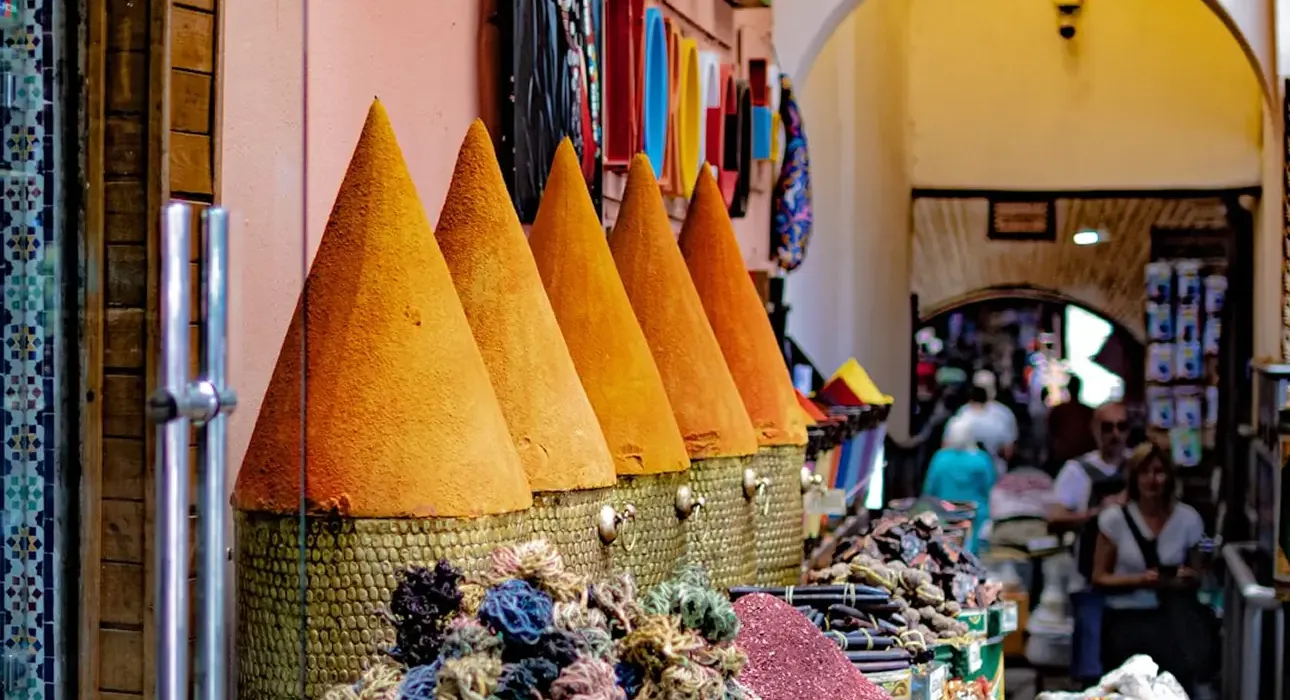
Marrakech does not ease you in gently. From the moment you step through the gates of the medina, every sense is engaged. The air carries cumin and cedar, fresh leather and orange blossom. Voices call out in Arabic, French, and Berber. Colors stack upon colors in every direction. It is overwhelming, exhilarating, and completely unforgettable.
The souks of Marrakech are not a tourist attraction bolted onto a modern city. They are the city itself, a living commercial network that has operated continuously for nearly a thousand years. Each souk specializes: one lane sells nothing but slippers, another is devoted to brass lanterns, a third to mountains of spices measured by the handful. The organization is ancient and organic, and getting lost in it is half the point.
What makes Marrakech singular is that the craftsmanship is real. The metalworkers, weavers, and leather dyers you see in the souks are not performing for cameras. They are doing the same work their families have done for generations, using techniques passed from master to apprentice in an unbroken chain.
A day in the souks begins best in the early morning, before the heat builds and the crowds thicken. Start at the edges, where local shoppers buy vegetables and bread, then work your way inward toward the dyers' quarter and the spice markets near the central square of Jemaa el-Fna.
Turmeric, saffron, ras el hanout, dried roses, and black soap are piled in pyramids of color. Vendors will offer you tea and explain each blend with genuine enthusiasm. Bargaining is expected and should be approached with humor and patience, never aggression.
Handwoven Berber carpets, embroidered caftans, and zellige tilework are among the finest purchases you can make. Visit the tanneries in the Chouara quarter to see leather being dyed in stone vats using methods unchanged since the medieval period. The smell is powerful, but the sight is remarkable.
Stay in a riad, a traditional courtyard house converted into a guesthouse. Behind plain medina walls, these hidden homes open onto tiled courtyards with fountains and orange trees. Rooftop terraces offer sunset views over the city with the Atlas Mountains in the distance.
In the souks, commerce is conversation, and every purchase is a story you carry home.
Marrakech asks something of you that most destinations do not: it asks you to engage. You cannot float passively through the medina. You must negotiate, navigate, choose, and respond. And in doing so, you discover a city that is generous, complex, and deeply alive. The souks will exhaust you, but they will also remind you what it feels like to be fully awake in a foreign place.

In shoulder season, terrace tables open, trails are breezy, and rates soften—here’s how to time ferries.
A slow route to ferries, stays, and beaches where cruise ships never dock.
A modular wardrobe, light layers, and weatherproof essentials that flex across every stop on your route.